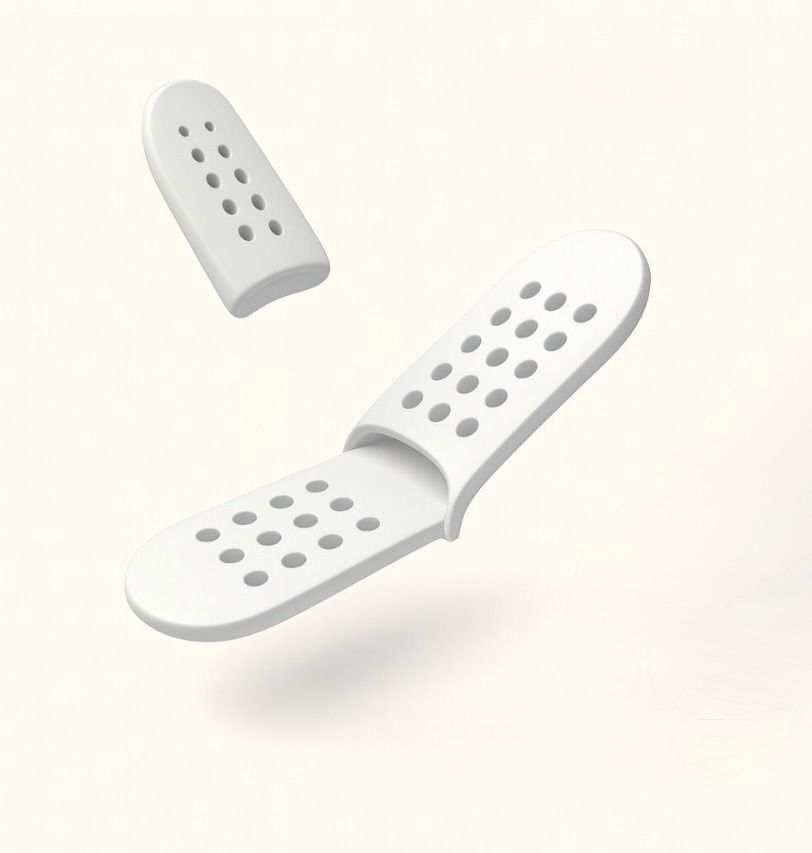
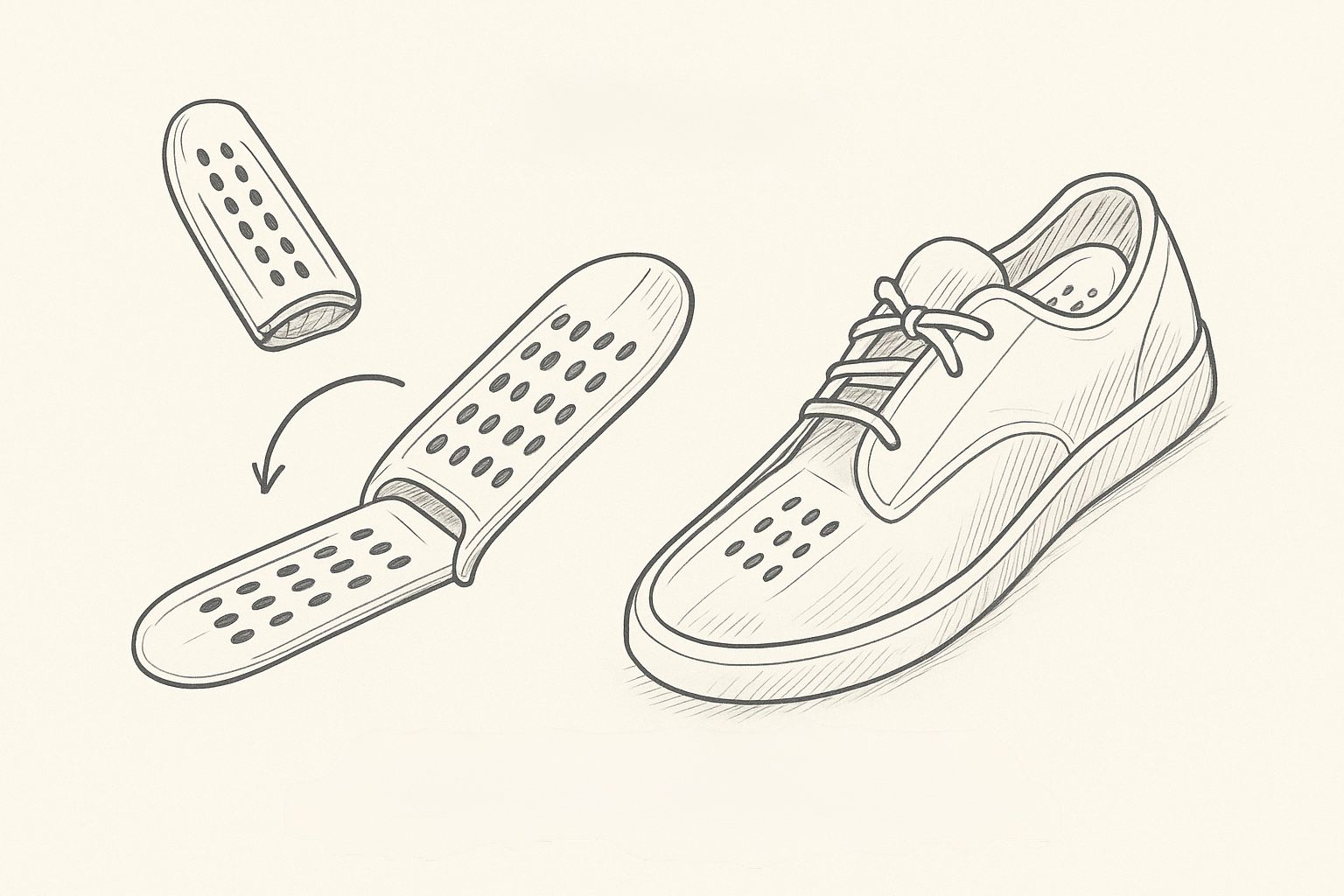
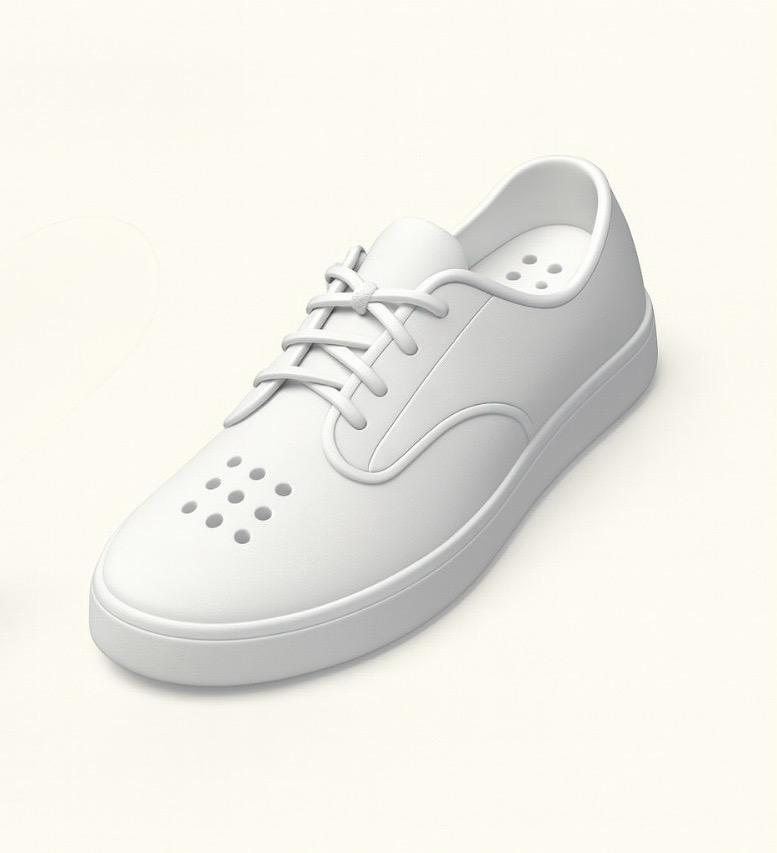
AirDry is a passive, foldable shoe-drying and odor-control insert designed to improve everyday footwear hygiene. Developed through user research and material exploration, the product uses natural absorbent materials and smart airflow design to dry shoes without electricity, heat, or chemicals. AirDry offers a simple, reusable, and sustainable solution for daily shoe care.
My Approach
My approach to this project was rooted in observing everyday problems and solving them through simple, meaningful design. Instead of starting with technology or complex mechanisms, I began by understanding how people actually use and maintain their footwear in daily life. I followed a user-driven design process that combined field research, surveys, interviews, and hands-on experimentation.
I focused on designing a solution that would fit seamlessly into existing routines—something users would naturally adopt without effort, instructions, or dependency on electricity. The goal was to create a product that feels intuitive, practical, and sustainable, rather than engineered or intimidating.
Vision and Innovation
My vision with AirDry was to create a quiet innovation—a product that solves a common problem without drawing attention to itself. Innovation, for me, does not always mean adding complexity; it often means removing unnecessary elements.
AirDry innovates by combining natural moisture absorption, odor control, and passive airflow into a single foldable insert. Unlike electric shoe dryers or disposable deodorizers, this product works without power, heat, or chemicals. The innovation lies in how simple materials are layered and structured to perform multiple functions simultaneously, making the product reusable, portable, and eco-friendly.
Identifying Unique Challenges
One of the key challenges was that shoe moisture is often overlooked, even though it affects hygiene, comfort, and shoe lifespan. Users are aware of the problem but rely on inconsistent methods like sunlight or newspapers.
Another challenge was designing something that could work inside the shoe, a space that is constrained, dark, and poorly ventilated. The product had to fit different shoe types without deforming them, while still allowing airflow and absorption. Balancing effectiveness with comfort, size, and affordability required careful material and form decisions.
Resolving Complex Problems
I addressed these challenges by breaking the problem into smaller functional needs:
moisture absorption, odor reduction, airflow, portability, and reusability.
Instead of solving each issue separately, I designed a layered system where each component supports the other. The foldable frame creates ventilation space, the bamboo charcoal controls odor and bacteria, and the silica-based sheet improves moisture absorption. By resolving multiple problems through one integrated structure, the product remains simple while still being effective.
User-Centric Design
User-centric design was central to every decision I made. Research insights showed that users wanted something that required zero effort—no plugging in, no refills, no maintenance. This directly influenced the choice to make AirDry passive, foldable, and reusable.
I tested prototypes with students, office workers, and active users to observe real interactions. Their feedback shaped the final form, weight, foldability, and material thickness. The design evolved not through assumptions, but through actual user behavior and preferences.
Meeting User Needs
AirDry meets user needs by fitting naturally into daily life. It can be placed inside shoes overnight, carried while traveling, and reused repeatedly without added cost. It addresses both functional needs (drying and odor control) and emotional needs (cleanliness, comfort, and confidence).
By avoiding electricity and chemicals, the product also aligns with users who prefer natural and sustainable solutions. Its affordability ensures accessibility, while its minimal design allows it to blend into everyday use without disruption.
Conclusion
Through AirDry, I aimed to demonstrate how thoughtful product design can improve everyday experiences. This project reflects my design philosophy: start with people, respect simplicity, and let form follow real function.
AirDry is not just a product—it is a response to a daily inconvenience that most people accept as normal. By addressing it through research-driven, user-focused design, the project highlights how small interventions can create meaningful impact in everyday life.